Dominican Spanish slang will transform your experience in the Dominican Republic from tourist to temporary local. After visiting in the DR for several years, I can tell you that mastering these Dominican Republic expressions isn’t just about communication—it’s your passport to authentic connections, better prices at local markets, and those genuine Dominican smiles that come when gringos actually “get it.”
The Dominican Republic has one of the most distinctive and creative Spanish dialects in the Caribbean, shaped by Taíno indigenous languages, African influences, and centuries of cultural evolution. Local Spanish phrases Dominican style can sound like rapid-fire poetry to newcomers, but once you crack the code, you’ll discover a warm, expressive language that reflects the island’s vibrant culture. Whether you’re staying in Bavaro, Punta Cana, or exploring beyond the resort walls, these expressions will open doors—literally and figuratively.
Start with basic Spanish before diving into slang: Essential Spanish Phrases Bavaro Complete Tourist Guide
Essential Dominican Spanish slang for everyday survival
The foundation of Dominican communication rests on a handful of expressions you’ll hear dozens of times daily. “¿Qué lo que?” (pronounced KEH-loh-KEH) serves as the universal Dominican greeting, replacing the formal “¿Cómo estás?” It literally means “what’s what” but functions like “what’s up?” You’ll hear this everywhere from hotel staff to beach vendors to taxi drivers.
“Vaina” might be the most versatile word in Dominican Spanish, serving as the Swiss Army knife of vocabulary. It means “thing,” “stuff,” or “situation” and can be positive, negative, or completely neutral depending on context. “¿Qué es esa vaina?” (What is that thing?) or “Esta vaina está buena” (This thing is good) demonstrate its flexibility. Master “vaina” and you’re halfway to sounding Dominican.
The response “Tato” (a contraction of “está todo”) means “everything’s fine” and serves as the standard reply to greetings. When someone asks “¿Cómo tú ‘tá?” (How are you?), responding with “Tato” immediately marks you as someone who understands local communication patterns. “Chin” (a little bit) from the Taíno language appears constantly in daily conversation—”Dame un chin de azúcar” (Give me a little sugar) or “Espera un chin” (Wait a little bit).
“Pana” means friend or buddy and creates instant warmth in conversations. Calling someone “mi pana” (my friend) signals familiarity and respect. Similarly, “jevi” (cool, awesome) and “bacano” (really cool) express approval and enthusiasm. These terms work perfectly for complimenting someone’s outfit, expressing appreciation for good service, or showing genuine interest in Dominican culture.
Transportation and getting around like a local
Dominican transportation vocabulary differs significantly from standard Spanish, and knowing these terms prevents confusion and potential overcharging. “Guagua” means bus—not “baby” as in other Spanish-speaking countries. Public buses remain the primary transportation method for most Dominicans, and saying “¿Dónde está la parada de guagua?” (Where’s the bus stop?) helps you navigate like a local.
“Concho” refers to shared taxis or any vehicle used for transportation. These informal taxis operate throughout the DR, especially in non-tourist areas. “Motoconcho” specifically means motorcycle taxi, common for quick trips through traffic-heavy areas. In Bavaro and Punta Cana, you’ll encounter these terms when venturing beyond resort boundaries.
When negotiating transportation, use “¿Cuánto me cobra para…?” (How much do you charge to…?) rather than the more formal “¿Cuánto cuesta?” This signals you understand local negotiation patterns. Follow up with “¿Precio fijo?” (Fixed price?) to clarify whether the rate is negotiable. The phrase “Con aire” (with air conditioning) becomes crucial in the Caribbean heat—always confirm if AC is included in taxi rates.
Dominican drivers appreciate directness, so “Pare aquí, por favor” (Stop here, please) works better than lengthy explanations. In the Bavaro area, where many drivers work in tourism, they often switch between Dominican Spanish and more standardized Spanish depending on their passenger, but using local expressions shows cultural appreciation.
Restaurant and food culture essentials
Dominican food culture extends far beyond tourist resort buffets, and understanding local Spanish phrases Dominican style for dining opens up incredible culinary experiences. “¿Qué me recomienda?” (What do you recommend?) starts conversations with local restaurant owners who love sharing their specialties with interested visitors.
Essential Dominican food vocabulary includes “mangú” (mashed plantains), the national breakfast dish, and “los tres golpes” (the three hits)—mangú served with fried salami, cheese, and eggs. “Concón” refers to the crispy rice from the bottom of the pot, considered a delicacy that restaurants often serve as a special side dish. “Pica pollo” means Dominican-style fried chicken, different from American or other Latin American preparations.
When ordering drinks, “una fría, por favor” (a cold one, please) typically means beer, specifically the local Presidente brand. “Colmado” refers to small corner stores where locals buy daily supplies—these neighborhood institutions often serve as social gathering spots and offer authentic Dominican snacks and beverages.
Portion sizes in Dominican restaurants tend to be generous, so “¿Viene con mucha comida?” (Does it come with a lot of food?) helps you order appropriately. The phrase “Sin picante, por favor” (Without spice, please) protects sensitive palates, though Dominican food generally uses less spice than Mexican cuisine. “Para llevar” (to go) works at local establishments, though many small Dominican restaurants focus on dine-in experiences.
Experience the culture behind these expressions: Dominican Hospitality Guide What to Expect Visiting Bavaro
Shopping and market negotiations
Dominican markets and local shops operate on relationship-building and friendly negotiation, making appropriate language crucial for fair prices and positive interactions. “¿A cómo está?” (How much is it?) sounds more natural than the formal “¿Cuánto cuesta?” and immediately signals you understand local communication patterns.
The phrase “Esto es muy caro” (This is very expensive) opens negotiations, typically followed by “¿Me hace un descuento?” (Can you give me a discount?). Dominican vendors expect some negotiation, especially in markets and informal settings, but approach it as friendly conversation rather than aggressive bargaining. “¿Es su último precio?” (Is that your final price?) signals you’re serious about purchasing while maintaining respect.
“Solo tengo [amount]” (I only have [amount]) often works when your budget is genuinely limited—many vendors prefer making a sale at a lower price than losing a customer entirely. The phrase “Me quedo con esto” (I’ll take this) finalizes your decision and typically ends negotiation.
In the Bavaro/Punta Cana area, many vendors accept dollars, but asking “¿Acepta dólares?” (Do you accept dollars?) and “¿Tiene cambio?” (Do you have change?) prevents confusion. Local colmados (corner stores) provide better prices than tourist shops, and using Dominican Spanish phrases signals respect for local culture while often resulting in friendlier service and better deals.
Emergency and practical situations
While the Dominican Republic is generally safe for tourists, knowing emergency Dominican Republic expressions provides peace of mind and practical assistance when needed. “¿Dónde está el hospital?” (Where is the hospital?) and “Necesito un doctor” (I need a doctor) represent essential phrases for medical situations.
“Es una emergencia” (It’s an emergency) communicates urgency, while “Soy alérgico/a a…” (I’m allergic to…) helps medical professionals provide appropriate care. “¿Habla inglés?” (Do you speak English?) often yields positive results in tourist areas, but attempting Spanish first shows cultural respect.
For safety situations, “Llamen a la policía” (Call the police) and “Auxilio” (Help!) provide immediate assistance. “Estoy perdido/a” (I’m lost) often results in helpful directions and friendly assistance from locals. The Tourist Police (POLITUR) specifically help visitors—asking “¿Dónde está POLITUR?” connects you with English-speaking officers trained in tourist assistance.
“¿Dónde está la farmacia?” (Where is the pharmacy?) helps locate medication, and “¿Tienen medicina para…?” (Do you have medicine for…?) helps describe symptoms. Dominican pharmacies often provide over-the-counter medications for common travel issues like stomach problems, headaches, and minor injuries.
Dominican Spanish evolution and what makes it unique
Understanding why Dominican Spanish sounds so different enhances your appreciation for the language and culture. Dominican Spanish emerged from Andalusian and Canarian Spanish dialects brought by early colonists, combined with Taíno indigenous influences and African linguistic elements. This complex foundation created a Spanish variety that drops consonants, speeds up dramatically, and incorporates vocabulary unknown in other Spanish-speaking countries.
The fast speech patterns characteristic of Dominican Spanish result from extensive consonant deletion—final ‘s’ sounds disappear (“está” becomes “ta”), ‘d’ between vowels vanishes (“casado” becomes “casao”), and entire phrases compress into single-sounding words. This creates the rapid-fire delivery that initially challenges foreigners but becomes endearing once understood.
Regional variations within the Dominican Republic reflect the country’s geography and history. The northern Cibao region shows the strongest accent with ‘r’ and ‘l’ sound substitutions (“amor” becomes “amol”), while the eastern region including Bavaro and Punta Cana maintains clearer pronunciation due to tourism industry influences. The capital Santo Domingo blends urban sophistication with traditional Dominican expressions.
Tourism has modified Spanish in the Bavaro/Punta Cana area, creating more standardized pronunciation and increased English vocabulary integration. However, venture beyond resort boundaries and you’ll encounter authentic Dominican Spanish in its full creative glory. The region’s demographic diversity—with workers from across the Dominican Republic and significant Haitian populations—creates a linguistic melting pot that reflects the country’s complexity.
Current trends and youth culture expressions
Dominican Spanish slang continues evolving rapidly, driven by social media, music culture, and generational changes. The dembow and reggaeton music scenes significantly influence vocabulary, with artists like El Alfa introducing expressions that spread through youth culture and eventually enter mainstream usage.
“Wawawa” identifies with street culture and working-class authenticity, while “popi” describes upper-class youth with preppy aesthetics. These generational markers reflect Dominican social dynamics and provide insight into cultural identities. “Yala” (okay, let’s go) shows Arabic influence in Dominican Spanish, demonstrating the language’s continued absorption of diverse influences.
Social media platforms accelerate slang adoption and evolution. TikTok creates viral expressions with short lifecycles, while WhatsApp (used by 77% of Dominicans) serves as the primary platform for sustained slang development. Instagram fosters longer-lasting expressions through text-based interactions and cultural content sharing.
Music-influenced expressions include “dembow” itself becoming synonymous with energetic or exciting, “perreo” (reggaeton dance style) expanding to mean general partying, and “fuego” (fire) expressing excellence. These terms reflect the Dominican Republic’s growing international music influence and cultural export.
Common mistakes and cultural sensitivity
Foreign Spanish speakers often make predictable errors when attempting Dominican Republic expressions. The most common mistake involves speaking too slowly and formally—Dominican Spanish expects rapid, informal delivery even with strangers. Using standard Spanish pronunciation marks you as foreign, while attempting Dominican patterns (dropping final ‘s’ sounds, contracting phrases) signals cultural understanding.
Context misunderstanding creates social awkwardness when foreigners use expressions inappropriately. “Vaina” works in casual conversation but sounds unprofessional in business settings. “Tíguere” can be complimentary or insulting depending on tone and relationship—use it only after observing local usage patterns.
Grammar confusion arises from Dominican Spanish’s unique constructions. “¿Cómo tú estás?” (How are you?) places the pronoun differently than standard Spanish, and Dominican speakers use “ustedes” instead of “vosotros” like all Latin American varieties. Don’t expect standard Spanish word order in casual Dominican conversation.
Cultural communication differences extend beyond language to behavior. Dominicans use limited personal space, point with puckered lips instead of fingers, and expect animated gestures in conversation. Understanding these cultural norms prevents misunderstandings and demonstrates respect for local customs.
Curse words integration in Dominican Spanish exceeds many other Spanish varieties. While some strong language appears in casual conversation among friends, tourists should recognize these expressions without using them. The research revealed that Dominicans use profanity more frequently than other Caribbean Spanish speakers, but context and relationship determine appropriateness.
Practical conversation examples for real situations
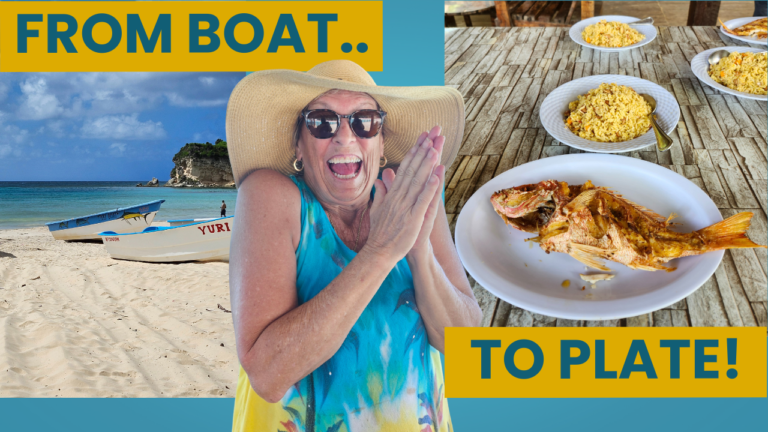
Ordering at a beach restaurant: You: “¡Saludos! ¿Qué me recomienda de comida típica?” (Greetings! What typical food do you recommend?) Server: “Te recomiendo el pescao frito con tostones y ensalada verde.” (I recommend fried fish with plantains and green salad.) You: “¿Cómo está el pescado?” (How is the fish?) Server: “Ta’ fresco, recién llegao de la mar.” (It’s fresh, just arrived from the sea.) You: “Perfecto. Y para beber, una fría, por favor.” (Perfect. And to drink, a cold beer, please.)
Bargaining at a local market: Vendor: “Para ti, mi amor, quinientos pesos.” (For you, my love, five hundred pesos.) You: “¡Ay, muy caro! ¿Me hace un descuento?” (Oh, very expensive! Can you give me a discount?) Vendor: “Dame trescientos.” (Give me three hundred.) You: “¿Su último precio?” (Your final price?) Vendor: “Doscientos cincuenta, pero porque me caes bien.” (Two hundred fifty, but because I like you.)
Taking a taxi: You: “¡Ey! ¿Cuánto me cobra para el Barceló?” (Hey! How much do you charge to the Barceló?) Driver: “Son ochocientos pesos, con aire.” (It’s eight hundred pesos, with air conditioning.) You: “¿No me hace precio?” (Won’t you give me a price?) Driver: “Dame seiscientos y vamo’.” (Give me six hundred and let’s go.)
Slang to recognize but use carefully
Dominican Spanish includes strong language and expressions that tourists should understand but avoid using. “Coño” appears frequently as an exclamation similar to “damn” in English—recognize it without incorporating it into your vocabulary. “Mierda” (shit) and “joder” (f*ck) function similarly to English usage but carry stronger social implications in Dominican culture.
Extremely offensive terms like “mamagüevo” (cocksucker) and “chinga tu madre” (f*ck your mother) should be completely avoided. These expressions carry serious social consequences and can destroy relationships or create dangerous situations. “Cuero” (whore) represents a particularly derogatory term for women that has no acceptable usage for foreigners.
Context warnings apply to seemingly mild expressions that carry hidden meanings. “Papaya” has vulgar implications unique to Dominican culture, unlike other Spanish-speaking countries where it simply means the fruit. “Semilla” (seed) can reference female anatomy in vulgar contexts, making innocent-sounding conversations potentially inappropriate.
Safer alternatives include “Qué mal” (too bad) instead of stronger curse words, “Mi madre” (my mother) for expressing surprise, and “Ay, Dios mío” (Oh my God) for shock or frustration. These expressions convey emotion without risking social offense or cultural misunderstanding.
Conclusion
Mastering Dominican Spanish slang transforms your Caribbean experience from surface-level tourism to authentic cultural engagement. These Dominican Republic expressions represent more than vocabulary—they’re keys to understanding Dominican warmth, creativity, and cultural pride. Local Spanish phrases Dominican style reflect a society that values relationship-building, directness, and linguistic creativity.
Start with essential greetings like “¿Qué lo que?” and practical terms like “vaina,” “chin,” and “pana.” Practice with friendly locals who appreciate your cultural interest and patience with rapid speech patterns. Remember that Dominicans generally respond positively to foreigners attempting their expressions, viewing it as respect for their culture rather than appropriation.
The Bavaro/Punta Cana region offers an ideal environment for practicing Dominican Spanish—clear pronunciation due to tourism influences, patient locals accustomed to foreign visitors, and plenty of opportunities for authentic interaction beyond resort boundaries. Use this guide as your foundation, but remember that language learning requires practice, patience, and genuine cultural curiosity.
Dominican Spanish slang opens doors to authentic experiences, fair prices, genuine friendships, and memories that extend far beyond typical tourist encounters. Whether you’re ordering fresh fish at a local restaurant, negotiating in a colorful market, or simply connecting with your taxi driver, these expressions will enrich your Dominican Republic adventure immeasurably.
Discover all languages spoken in the area: What Languages Spoken Punta Cana Complete Guide Travelers