If you ask a local where to find the most beautiful beach in Punta Cana, chances are they won’t point you toward one of the resort-lined stretches of Bavaro. They’ll tell you about Macao Beach — or as the Dominicans call it, Playa Macao — a stunning, largely undeveloped stretch of white sand and turquoise water that feels like stepping into the Dominican Republic the way it was meant to be experienced.
Whether you’re a first-time visitor looking to escape the all-inclusive bubble or a seasoned Punta Cana traveler searching for something more authentic, Macao Beach deserves a spot at the top of your must-visit list. Here’s everything you need to know.
Where Is Macao Beach?
Macao Beach is a public beach located in the province of La Altagracia on the eastern coast of the Dominican Republic. It sits between the hotel zones of Bavaro Beach to the south and Uvero Alto to the north, tucked along a nearly half-moon-shaped bay facing the Atlantic Ocean.
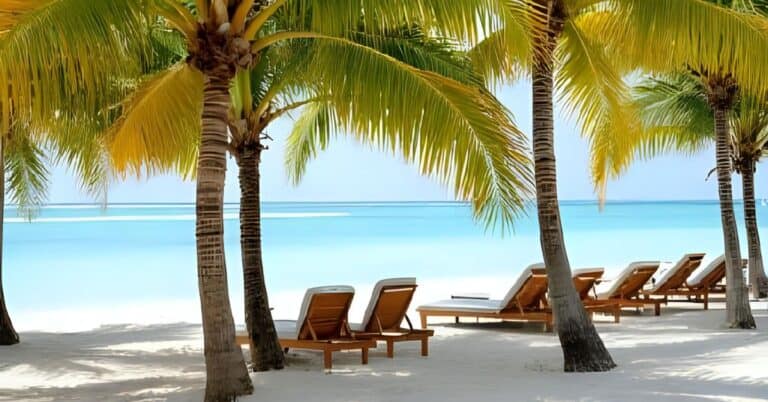
The beach stretches an impressive three miles (about four kilometers) along the coastline, with dramatic cliffs, swaying palm trees, and soft white sand that feels worlds away from the manicured resort beaches just a short drive south.
Unlike most beaches in the Punta Cana area — which are lined with dozens of massive all-inclusive resorts — Macao Beach has remained refreshingly undeveloped. As of now, there’s only one all-inclusive resort on its shores: the Dreams Macao Beach Punta Cana, which opened in 2020. The rest of the beachfront is occupied by local restaurants, surf schools, and the charming little village of Macao just behind the sand.
For general information about other beaches, be sure to check out our article:
A Beach With Deep Roots: The History of Playa Macao
Long before Punta Cana became a world-famous resort destination, Macao Beach was already a beloved gathering place. The name “Macao” is believed to have indigenous Taíno origins — the Taíno people inhabited the Dominican Republic long before Spanish colonization, and the word is thought to describe a type of bird in their language. Some locals also associate the name with the area’s history as a gathering place for trade and fishing.
For centuries, Playa Macao wasn’t a tourist destination at all. It was a working beach where local fishermen launched their wooden boats from the shore each morning, and families from nearby towns gathered on weekends to enjoy the sun and feast on the fresh catch of the day. Even today, you’ll still spot fishermen bringing in their nets — a living reminder of the beach’s roots.
It wasn’t until the broader Punta Cana tourism boom that visitors began discovering Macao’s natural beauty. UNESCO has recognized Macao Beach as one of the most beautiful beaches in the Caribbean, a title it has more than earned. Yet despite growing popularity, the beach has managed to preserve much of its authentic character — something that’s increasingly rare along this stretch of coast.
How to Get to Macao Beach From Punta Cana
Getting to Macao Beach is straightforward, and you have several options depending on your budget and travel style.
By Taxi or Uber: This is the most convenient option for most visitors. From the Bavaro area, the drive takes about 20 to 25 minutes. From Punta Cana International Airport, expect about 35 to 40 minutes. Recent travelers report Uber fares from the Punta Cana hotel zone running around 1,300 Dominican pesos (roughly $22–$30 USD), with fares from Bavaro being about half that.
Important Note – Be SURE you have return transportation arranged before you arrive. Uber may be unavailable due to Macao’s more remote location. Trust me, we learned this the hard way. Depending on your budget, private transportation may be the way to go.
By Private Transportation: If you want a stress-free experience, booking private transportation is the smartest move — especially for the return trip. While Uber and taxis can get you to Macao Beach without much trouble, getting back is a different story. Macao’s more remote location means Uber drivers are scarce in the area, and you could find yourself stranded on the beach with no ride home and no cell signal to help. A private car service will drop you off and pick you up at an agreed-upon time, so you can actually relax and enjoy your day. Many local transportation companies offer round-trip service to Macao Beach at reasonable rates, and your hotel concierge can usually arrange one for you. It costs a bit more than an Uber, but the peace of mind is worth every peso.
For concierge type private transportation, call Dawn at Passports ‘N Paradise.
By Rental Car: If you value flexibility, renting a car is a great option. The drive from Bavaro is easy and well-marked, and there’s a dedicated free parking area for day-trippers.
By Excursion Tour: Many visitors first discover Macao Beach as a stop on a dune buggy, ATV, or horseback riding tour — and it’s often the highlight of the trip. These tours typically combine the beach visit with stops at the nearby Taíno Cave and a traditional Dominican house where you can sample local coffee, chocolate, and mamajuana.
By Public Transport: It’s possible but a bit complicated. If your resort is in Uvero Alto, you can take a direct public bus (called a guagua) to Macao Beach. From other areas, you’d need to transfer, making a taxi or tour the more practical choice. This is probably not the best option.
Pro Tip: Bring cash in small denominations! Many local vendors and beachside restaurants at Macao Beach don’t accept credit cards.
What People Love About Macao Beach
There’s a reason Macao Beach consistently earns rave reviews. Here’s what visitors can’t stop talking about.
It’s Beautifully Unspoiled. In a region where massive resorts dominate the coastline, Macao Beach stands out for what it doesn’t have. No towering hotel buildings blocking the view. No roped-off resort sections. Just miles of natural white sand, turquoise water, scenic cliffs, and palm trees. It’s the kind of beach that reminds you why you came to the Caribbean in the first place.
The Surf Is Incredible. Macao Beach faces the Atlantic Ocean, which means bigger, more powerful waves than you’ll find at the calm resort beaches. This makes it one of the only beaches in the entire Punta Cana region that’s suitable for surfing. Surf schools like Macao Surf Camp offer lessons for all levels right on the beach, and you can rent boards by the hour. Even if you’re not a surfer, the waves make for excellent boogie boarding.
The Food Is Authentic and Fresh. Forget overpriced resort buffets. The local restaurants and food shacks lining Macao Beach serve up some of the freshest seafood in Punta Cana. Think deep-fried whole fish pulled from the ocean that morning, served with Dominican tostones (fried plantains), moro (rice and beans), and fresh salad. It’s affordable, delicious, and about as authentic as Dominican dining gets. We especially love La Doña at the far end of the beach nearest the cliff.
It’s a Photographer’s Dream. Visitors rave about Macao Beach as a stunning location for photos. Between the scenic cliffs, slender palm trees, and shady trees, every corner of the beach offers a different backdrop. It’s become a popular spot for engagement photos, family portraits, and Instagram-worthy travel shots.
Less Seaweed Than Other Punta Cana Beaches. One of the biggest concerns for visitors to the Punta Cana area is sargassum seaweed, which has increasingly affected Caribbean beaches in recent years. Macao Beach has a natural advantage here — its north-facing orientation and a small protective peninsula to the east shield it from much of the Atlantic current that washes sargassum ashore. While no beach is completely immune, Macao tends to stay significantly clearer than beaches like Bavaro or Cap Cana, especially during peak seaweed season (May through October).
It Feels Like the Real Dominican Republic. The little village of Macao sits right behind the beach and has maintained its authentic local charm. You’ll find colmados (mom-and-pop stores), local bars, small restaurants called comedores, and barbershops — the everyday fabric of Dominican village life. It’s a world away from the resort bubble, and that’s exactly the point.
What People Don’t Love About Macao Beach
No beach is perfect, and Macao has a few things that catch visitors off guard. Here’s what to be aware of so you can plan accordingly.
Persistent Beach Vendors. This is the number one complaint from visitors. Vendors selling cigars, hair braiding, souvenirs, and photo opportunities with iguanas can be quite persistent. A firm “no, gracias” usually does the trick. It’s best to simply accept this as part of the local beach culture.
Strong Waves and No Lifeguards. The same Atlantic waves that make Macao Beach a surfer’s paradise also mean you need to exercise caution when swimming. Swells can reach seven to ten feet, and there are no lifeguards on duty. If you’re not a strong swimmer, the eastern part of the beach seems to have waves and currents that are noticeably milder. Keep a close eye on children at all times.
Limited Amenities. This isn’t a resort beach with perfectly arranged lounge chairs and waiters bringing cocktails to your towel. Macao Beach is a public beach with a rustic vibe. You can rent lounge chairs and umbrellas from local vendors (prices are negotiable). There are actual restrooms available but they my seem a little rustic to some.
Pricing Can Be Unpredictable. While beach dining is generally affordable, some visitors have reported unexpectedly high bills at beachfront restaurants — especially for lobster and premium items. Always ask about prices before you order, and don’t be afraid to clarify what you’re being charged for. The same goes for activities like chair rentals, surf board rentals, and photo ops — negotiate up front.
Why You Should Visit Macao Beach
Here’s the bottom line: if you’re coming to Punta Cana and spending your entire trip behind the walls of an all-inclusive resort, you’re missing out on one of the most beautiful and authentic experiences the region has to offer.
Macao Beach gives you something the resorts simply can’t — a genuine connection to the Dominican Republic. It’s where you eat fish that was swimming in the ocean a few hours ago, prepared by the same family that’s been cooking on this beach for generations. It’s where you watch real surfers ride real Atlantic waves, not a choreographed resort water show. It’s where you walk through a Dominican village and see everyday life unfolding — kids playing in the street, neighbors chatting at the colmado, merengue drifting from an open window.
It’s also just flat-out gorgeous. The combination of white sand, turquoise water, dramatic cliffs, and palm-lined shores is the kind of Caribbean scenery that postcards are made of — except here, you don’t have to share it with thousands of resort guests.
Whether you spend a full day surfing, eating, and soaking up the sun, or just swing by for a few hours as part of an excursion, Macao Beach will leave you with the kind of travel memories that a resort pool simply can’t compete with.
Tips for Your Visit
- Bring cash in small bills — most vendors don’t take cards.
- Wear water shoes if you plan to walk the full beach — occasional rocks and debris.
- Apply reef-safe sunscreen — protect both your skin and the ocean.
- Go early to beat the tour bus crowds and claim a prime spot.
- Say a firm but friendly “no” to vendors you’re not interested in — they’ll move on.
- Bring your own towel and water — you’ll be glad you did.
- Check wave conditions before swimming — look for green flags indicating safe conditions.
- Don’t leave valuables unattended — there are no lockers, so travel light.
Ready to experience the real Punta Cana? Macao Beach is waiting. And trust us — once you’ve been, you’ll understand why the locals have been keeping this one close to their hearts for generations.